
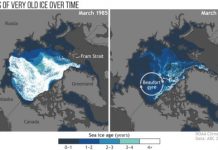
Research: Annual update improves understanding of changing climate, wildlife impacts —
NOAA's annual report card on the Arctic, released today at the American Geophysical Union fall meeting in Washington, D.C., measures the changing climate...

Research: Did supernovae kill off large ocean animals at dawn of Pleistocene? —
About 2.6 million years ago, an oddly bright light arrived in the prehistoric sky and lingered there for weeks or months. It was...

Research: Algorithms to locate centrioles in the cell —
Investigators from the Neurodegenerative Diseases Research Group at the University of Extremadura are working on a line of research which studies signalling mediated...

Research: How catnip makes the chemical that causes cats to go crazy —
Researchers at John Innes Centre have shed light on how catnip -- also known as catmint -- produces the chemical that sends cats...
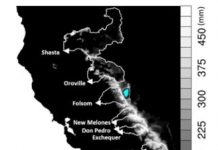
Research: Sierra snowpack could drop significantly by end of century —
A future warmer world will almost certainly feature a decline in fresh water from the Sierra Nevada mountain snowpack. Now a new study...
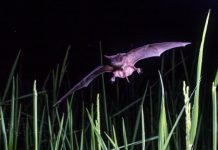
Research: ‘Pest-controlling’ bats could help save rainforests —
A new study shows that several species of bats are giving Madagascar's rice farmers a vital pest control service by feasting on plagues...
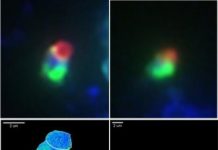
Research: Ocean fertilization by unusual microbes extends to frigid waters of Arctic Ocean —
Microbes that provide natural fertilizer to the oceans by "fixing" nitrogen from the atmosphere into a form useable by other organisms were once...
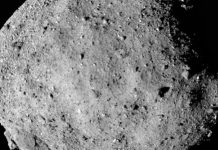
Research: Water found on asteroid, confirming Bennu as excellent mission target —
From August through early December, the OSIRIS-REx spacecraft aimed three of its science instruments toward Bennu and began making the mission's first observations...

Research: Why animals are better at sniffing complex smells —
Animals are much better at smelling a complex "soup" of odorants rather than a single pure ingredient, a new study by the University...
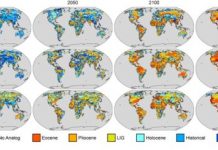
Research: Humans may be reversing the climate clock, by 50 million years —
Our future on Earth may also be our past.
In a study published Monday (Dec. 10, 2018) in the Proceedings of the National Academy...
Top News

Hey ISIS, You Suck: Local Muslims Post Anti-ISIS Billboard
A new billboard on Manchester Road in Missouri reads, "HEY ISIS, YOU SUCK!!! From: #ActualMuslims."
A group of Muslim-Americans have put up a blunt billboard...