
Long before they became essential to tropical ecosystems, termites were just one group among many. New research led by the Okinawa Institute of Science and Technology shows that their dominance today is the result of two major evolutionary breakthroughs triggered by global ecological crises.
By analyzing DNA from nearly all termite species across the Americas—including more than 200 newly identified species—scientists reconstructed a detailed evolutionary timeline. Their findings reveal that termites did not evolve gradually, but instead diversified in two distinct waves, separated by roughly 30 million years.
The first shift is linked to the aftermath of the Cretaceous–Paleogene extinction event, around 66 million years ago, which wiped out the dinosaurs and reshaped global ecosystems. The second occurred following the Eocene–Oligocene extinction event about 33 million years ago, a period marked by rapid climate cooling and the collapse of vast tropical forests.
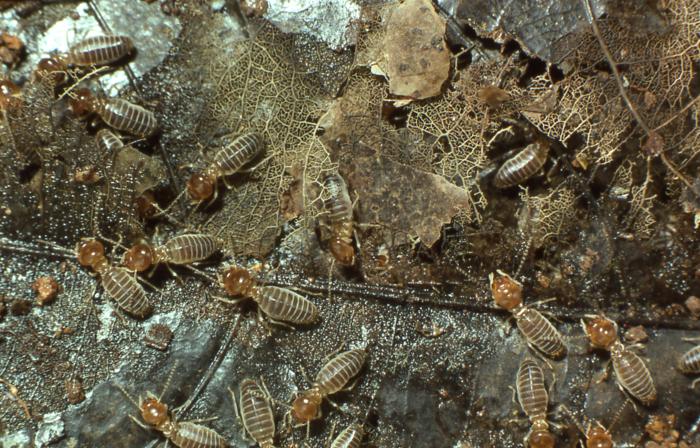
Rather than being weakened by these crises, certain termite lineages adapted. A key innovation—the ability to digest soil—allowed them to exploit newly available ecological niches. This shift proved decisive. Today, soil-feeding termites account for more than half of all termite species, playing a central role in nutrient recycling, soil aeration, and ecosystem stability.
Published in Current Biology, the study highlights how extinction events can act as catalysts for evolutionary success. As ecosystems collapsed, termites evolved new traits such as soil feeding, complex nest-building, and even fungus cultivation—transformations that allowed them to thrive where other species disappeared.
The research also raises new questions. Despite originating in Africa, termites spread across continents, including the Americas, long after landmasses had separated. How soil-dependent species managed to cross oceans remains unclear, pointing to gaps in our understanding of species dispersal.
Beyond evolutionary biology, the findings carry broader implications. Termites now represent up to 20% of rainforest biomass and are fundamental to ecosystem functioning. Their resilience in the face of past global disruptions offers insights into how species may respond to current environmental pressures, including climate change and deforestation.