
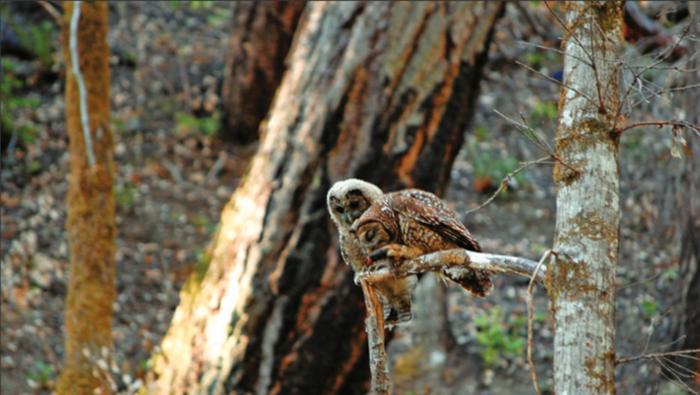
A new study from Oregon State University suggests that forest restoration efforts in the Pacific Northwest can coexist with the protection of northern spotted owls, a species considered threatened in the United States.
Published in the journal Forest Ecology and Management, the research examined how controlled forest restoration strategies, including thinning dense tree stands and planned burns, could help reduce wildfire risks without compromising critical owl habitats.
Researchers analyzed decades of spotted owl monitoring data alongside wildfire records from 1985 to 2022 across the eastern Cascades in Washington and the Klamath region spanning Oregon and California. The study focused on identifying “fire refugia,” forest areas naturally more resistant to severe fires because of their landscape position.
According to the findings, nesting and roosting habitats located in sheltered areas near drainage zones were more likely to survive wildfires, while forests situated on exposed upper slopes and ridgelines faced greater risks during extreme fire conditions.
Lead researcher Jeremy Rockweit said the results could help land managers better balance wildlife conservation and forest resilience strategies. The study argues that preserving ecologically diverse landscapes may offer a more effective long-term solution for both wildfire management and owl conservation.
The research also highlights the growing pressure caused by increasingly intense wildfire seasons across the western United States. Scientists warn that extreme fire conditions could still lead to significant losses of suitable owl habitat despite restoration efforts.
The northern spotted owl has remained at the center of environmental debates for decades, particularly around logging practices and forest conservation policies in the Pacific Northwest. Researchers believe the new findings could support more adaptive land management approaches as climate-related wildfire risks continue to rise.