
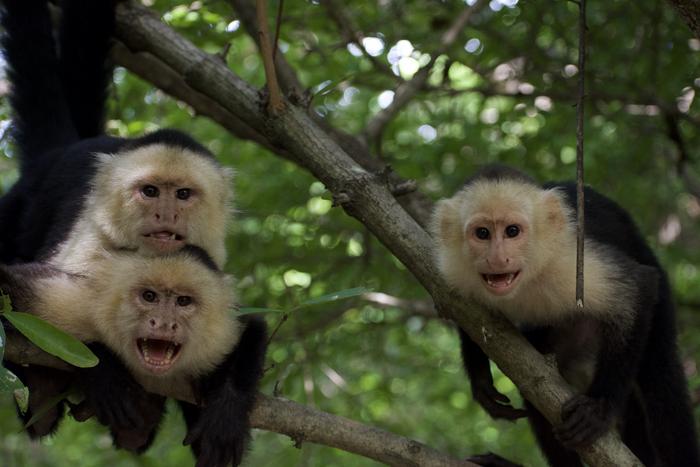
A long-term study led by researchers at the Max Planck Institute of Animal Behavior has revealed how climate extremes such as droughts and heavy rainfall can fundamentally reshape the social dynamics of animal groups. The findings are based on more than three decades of observations of wild white-faced capuchin monkeys living in Costa Rica’s tropical dry forests.
Published in Nature Ecology & Evolution, the research examined how environmental fluctuations alter the balance between the advantages and disadvantages of group living. Scientists discovered that while larger monkey groups generally benefit from stronger protection and better access to territory, climate disruptions can significantly weaken those advantages.
The project followed 12 neighboring capuchin groups over a 33-year period, combining field observations with satellite imagery to track changes in vegetation, food availability and habitat conditions. Researchers found that during normal seasons, larger groups could offset internal competition for food by expanding into areas controlled by smaller groups. However, this balance shifted dramatically during extreme climate events linked to El Niño and La Niña.
During severe droughts and unusually intense rainy periods, access to food, water and shade became increasingly limited, intensifying competition both within and between groups. Larger monkey communities, which normally dominate prime feeding areas, struggled to maintain their advantage as environmental pressure increased. Researchers warn that repeated climate extremes could eventually destabilize social structures and even cause groups to fragment.
Lead researcher Odd Jacobson explained that the study challenges long-standing assumptions about how large animal groups manage competition. Instead of simply benefiting from their size, the monkeys’ success appeared highly dependent on stable environmental conditions and predictable seasonal cycles.