A team of researchers in the United Kingdom has achieved a significant breakthrough in quantum sensing, overcoming a major technical challenge that has long limited efforts to detect dark matter and gravitational waves from the early universe.
Scientists from Imperial College London demonstrated that a key technique behind next-generation quantum detectors can function under realistic laboratory conditions, paving the way for future experiments capable of probing some of the deepest mysteries in modern physics.
The research, published in Nature, forms part of the Atom Interferometer Observatory and Network (AION), a collaborative project bringing together leading UK institutions to develop advanced quantum sensing technologies.
At the heart of the breakthrough are atom interferometers, highly sensitive instruments that use lasers to track the behavior of ultracold atoms with extraordinary precision. These devices are considered among the most promising tools for detecting extremely weak signals that could reveal the existence of dark matter or previously undetected gravitational waves.
One of the biggest obstacles facing researchers has been laser phase noise, a source of interference that can overwhelm the tiny signals scientists are trying to observe. In large-scale experiments, this noise can effectively hide the phenomena researchers hope to detect.
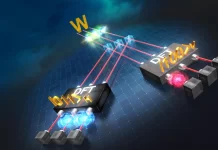
To address this challenge, the Imperial team tested a method based on comparing two separate atom interferometers operating simultaneously. By analyzing the differences between the two measurements, the researchers were able to cancel out the shared noise and recover meaningful signals.
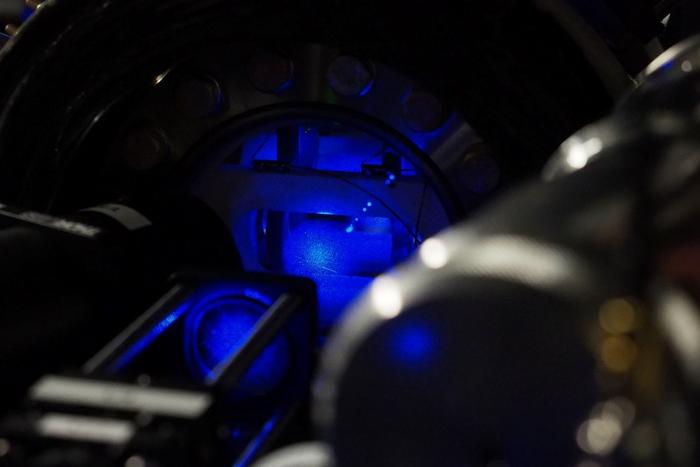
The experiment used two clouds of ultracold strontium atoms separated within a prototype system and controlled by a highly stable laser. To push the technology to its limits, the researchers deliberately introduced large amounts of additional noise into the setup.
Although each interferometer individually became unusable due to the overwhelming interference, the combined comparison successfully revealed the underlying signal. The team was even able to detect an artificial oscillating signal designed to mimic the effects of a passing gravitational wave or a dark matter field.
The achievement provides the first experimental validation of a fundamental principle required for future large-scale atom interferometers. Researchers believe the technology could eventually be deployed in major scientific facilities such as CERN in Europe or Fermilab in the United States.
Such next-generation detectors could explore previously inaccessible regions of the universe, opening new opportunities to study dark matter, gravitational waves and other phenomena that remain beyond the reach of current instruments.
The AION collaboration includes researchers from Imperial College London, the Universities of Birmingham, Cambridge, Liverpool, King’s College London and Oxford, alongside the STFC Rutherford Appleton Laboratory. Scientists involved in the project view the latest results as a crucial milestone toward building some of the world’s most advanced quantum experiments and unlocking new insights into the fundamental nature of the cosmos.