Astronomers have uncovered the strongest evidence to date that planets beyond our Solar System may possess powerful magnetic fields, a discovery that could significantly advance the search for potentially habitable worlds across the galaxy. The findings, published in the journal Nature Astronomy, offer an unprecedented glimpse into the magnetic environments of exoplanets.
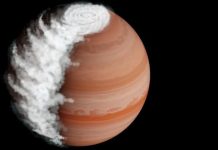
The international research team studied seven ultra-hot Jupiter exoplanets — giant gas worlds orbiting extremely close to their host stars. These planets are tidally locked, meaning one side permanently faces the star while the opposite side remains in darkness. The dramatic temperature contrast generates extraordinarily powerful winds, some exceeding 25,000 kilometers per hour.
Using observations from the MAROON-X instrument on the Gemini North Telescope and the ESPRESSO instrument on the Very Large Telescope, researchers measured atmospheric wind speeds across the planets. Surprisingly, they found that the hottest planets exhibited slower winds than expected, a phenomenon that challenged existing atmospheric models.
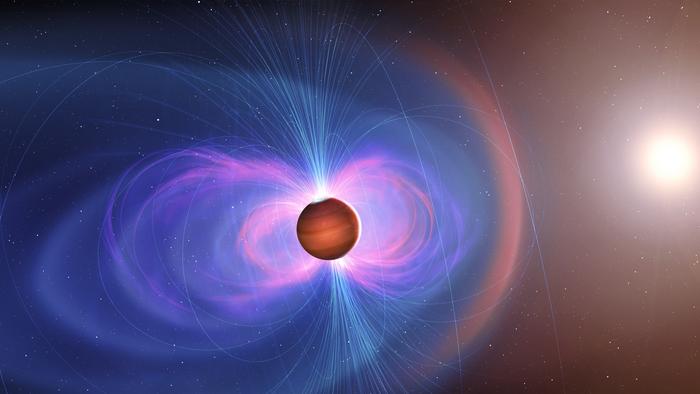
Scientists concluded that the most likely explanation is the presence of strong planetary magnetic fields acting as a brake on electrically charged particles in the atmosphere. By analyzing this effect, the team was able to estimate magnetic field strengths for the first time on several exoplanets. The results suggest that some of these distant worlds possess magnetic fields comparable to those found on planets within our own Solar System.
According to lead researcher Julia Seidel, the breakthrough opens an entirely new avenue for exoplanet science. Magnetic fields play a crucial role in protecting planetary atmospheres from stellar radiation, a factor considered essential for maintaining conditions that could support life. On Earth, the magnetic field shields the atmosphere from solar particles and helps preserve the planet’s habitability.
The study also raises the possibility of spectacular auroras on these distant worlds. Researchers believe interactions between stellar particles and powerful magnetic fields could generate light displays far more intense than Earth’s northern and southern lights.
Beyond revealing new details about giant exoplanets, the research provides astronomers with a valuable tool for investigating planetary evolution, atmospheric stability, and the long-term potential for habitability on worlds orbiting distant stars. As observational technologies continue to improve, magnetic field measurements could become a key factor in identifying planets most likely to sustain life in the future.