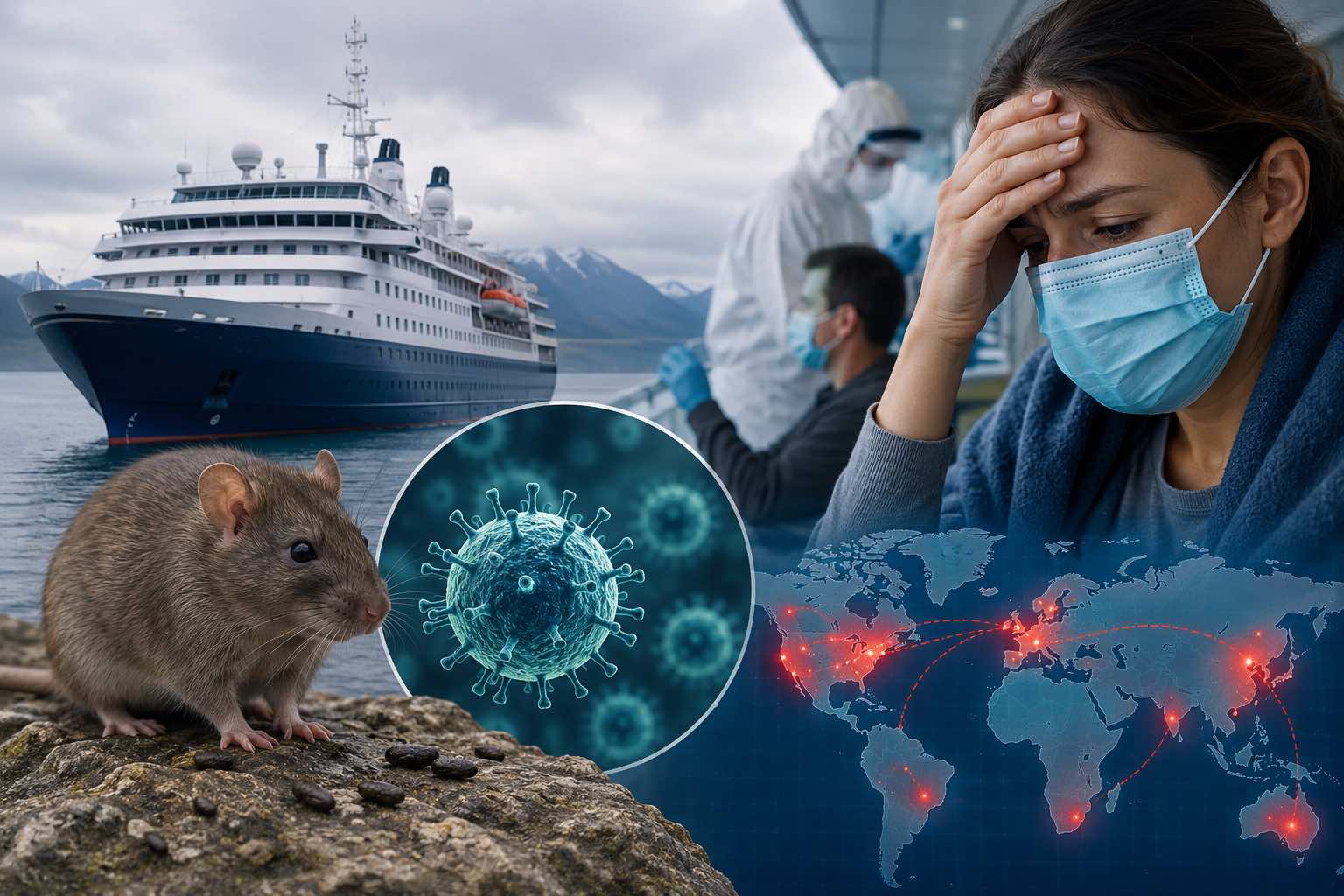
Health authorities are closely monitoring a hantavirus outbreak linked to the cruise ship MV Hondius after multiple confirmed and suspected cases were reported among passengers traveling across several countries. The World Health Organization stressed that the situation is serious but does not represent a new pandemic threat comparable to Covid-19.
The outbreak involves the Andes strain of hantavirus, a rare variant capable of limited human-to-human transmission through prolonged close contact. Most hantavirus infections are typically linked to exposure to rodents, particularly through contaminated urine, saliva, or droppings.
According to health officials, symptoms usually appear between two and four weeks after exposure, although they may emerge earlier or much later in some cases. Early symptoms often resemble severe flu and include fever, fatigue, muscle aches, headaches, chills, nausea, vomiting, diarrhea and abdominal pain. As the illness progresses, patients can develop coughing, chest pain, shortness of breath and fluid accumulation in the lungs, which can become life-threatening.
Several passengers have already been hospitalized, while contact tracing operations continue across multiple countries including the UK, the Netherlands, the United States and South Africa. Health agencies say the overall risk to the general public remains low because the virus does not spread easily through casual everyday contact.
Medical experts emphasize that there is currently no specific cure for hantavirus, although early hospital treatment can significantly improve survival chances. Researchers are also working on vaccine development as international health agencies continue monitoring the situation closely.