
Archaeologists studying an ancient site in central China have uncovered new evidence suggesting early humans developed advanced stone-making techniques during one of the harshest ice age periods, challenging long-standing theories linking innovation to warmer and more stable climates.
The discovery comes from the Lingjing archaeological site, where scientists found carefully crafted stone tools alongside animal remains believed to have been processed by early human groups known as Homo juluensis. Researchers say the tools demonstrate a high level of planning, precision and technical understanding rarely associated with East Asian populations from that period.
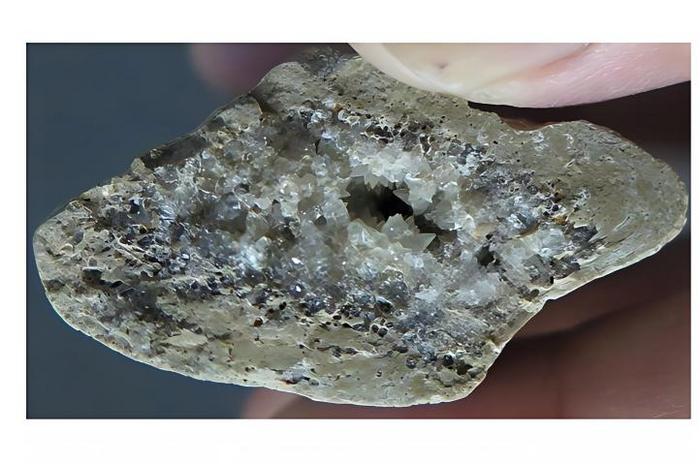
A new analysis of calcite crystals discovered inside a fossilized animal bone allowed scientists to revise the age of the site to around 146,000 years old, placing the toolmakers in the middle of a severe glacial era rather than a warmer interglacial period as previously believed.
Researchers explained that the crystals acted as a natural geological clock. By measuring uranium and thorium levels inside the calcite, the team determined the site was roughly 20,000 years older than earlier estimates.
The stone tools uncovered at Lingjing include asymmetrical cores designed to produce sharp flakes through controlled strikes, a process requiring sophisticated spatial thinking and an understanding of fracture mechanics. Scientists say the techniques show similarities to technologies associated with Neanderthals in Europe and early human groups in Africa.
The findings challenge assumptions that creativity and technological development emerged mainly during periods of environmental comfort. Instead, researchers believe difficult climatic conditions may have encouraged adaptation and innovation among ancient human populations.
Homo juluensis, the human group linked to the site, displayed a combination of traits found in both archaic East Asian humans and Neanderthals. Scientists say the latest discovery adds to growing evidence that advanced cognitive abilities were more widespread across ancient human populations than previously thought.
The study was published in the Journal of Human Evolution.