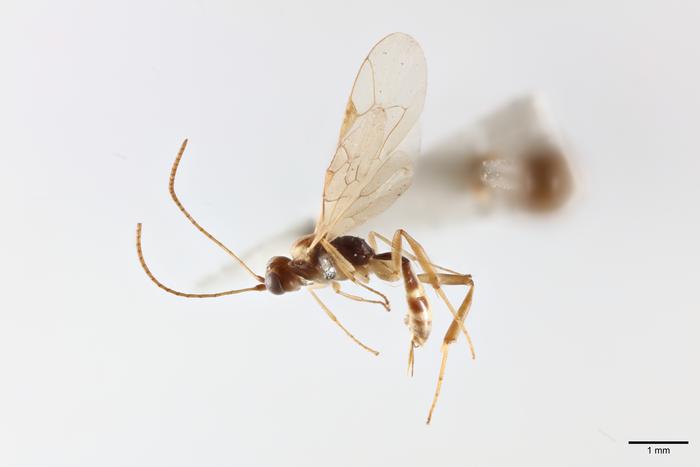
Scientists at London’s Natural History Museum have identified a newly discovered species of parasitic wasp from Chile and named it in tribute to Sir David Attenborough as the legendary broadcaster approaches his 100th birthday.
The insect, officially named Attenboroughnculus tau, was identified from a specimen preserved inside the museum’s collections for more than four decades. Researchers say the species is so genetically and physically distinct from related insects that it required the creation of an entirely new genus.
The tiny wasp measures just 3.5 millimetres in length and was originally collected in Chile’s Valdivia Province in 1983. Its species name, “tau,” refers to a distinctive T-shaped marking found on its abdomen.
The discovery was made by scientists from the Natural History Museum in London during a detailed re-examination of archived insect collections. Researchers highlighted unique anatomical characteristics including a curved abdominal structure, unusual wing morphology and specialized egg-laying features that separate the insect from previously known genera.
Dr Gavin Broad, principal curator of insects at the museum and lead author of the study, said Sir David Attenborough played a major role in inspiring his scientific career through the iconic documentary series “Life on Earth.”
Attenborough has frequently featured parasitoid wasps in his documentaries, helping introduce wider audiences to some of nature’s lesser-known species. Scientists behind the project said naming the new insect after him reflects his lasting influence on biodiversity research and environmental awareness.
Researchers also say the discovery demonstrates the continued scientific value of museum archives, where previously overlooked specimens may still reveal entirely unknown species decades after their collection.
The study describing Attenboroughnculus tau was published in the Journal of Natural History.