
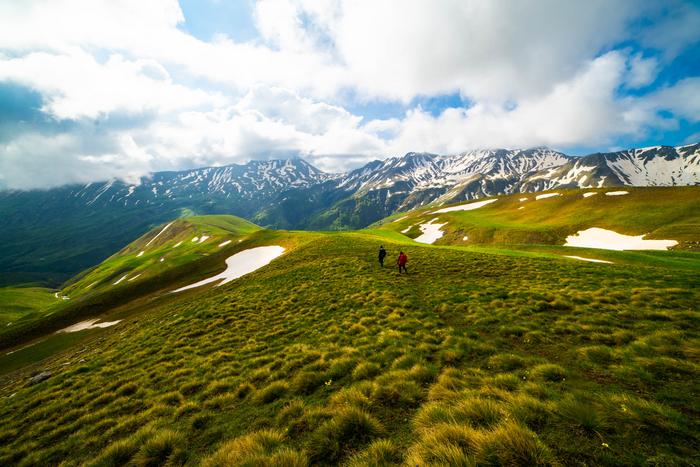
Snow reserves across Greece’s mountain ranges have declined dramatically over the past forty years, with new research revealing a loss of nearly 60% since the mid-1980s—an alarming shift that is reshaping water availability across the region.
The findings, led by researchers from the University of Cambridge, highlight a rapid acceleration in snow loss since the early 2000s. Using a combination of satellite imagery, climate datasets, terrain mapping and artificial intelligence, scientists developed a tool capable of reconstructing daily snow coverage patterns across Greece’s highest peaks from 1984 to 2025.
The results point to a clear driver: rising temperatures. Warmer conditions are increasingly causing precipitation to fall as rain rather than snow, even at higher elevations. This shift disrupts a critical natural system, where snowpack traditionally acts as a slow-release water reserve, feeding rivers, agriculture and ecosystems during the dry summer months.
Beyond the overall decline, the study notes that snow seasons are now shorter—starting later and melting earlier—further reducing water storage capacity. This trend is particularly concerning in Greece, where watersheds are relatively small and summer drought conditions are already a recurring challenge.
Researchers emphasize that the scale of change goes beyond normal climate variability, placing Greece among the most rapidly affected mountain regions in Europe. The implications extend beyond water supply, potentially impacting hydropower generation, agricultural productivity and long-term ecosystem stability.
The team is now working to translate these findings into projections of future water availability, aiming to understand how continued warming could reshape the region’s hydrological balance by the end of the century.