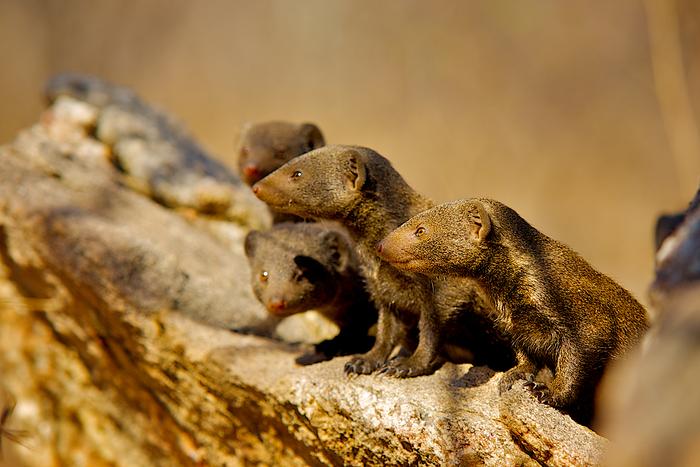
Dwarf mongooses may be far more strategic than previously thought. New research has revealed that these small African mammals actively anticipate potential confrontations with rival groups and modify their behaviour long before any encounter takes place.
The study, published in *Nature Ecology & Evolution*, found that mongoose groups constantly assess the risk posed by neighbouring rivals and adjust their movements, communication patterns and resource-protection strategies based on the threat level.
Researchers from the University of Bristol discovered that mongooses are capable of tracking where competing groups are likely to be and evaluating the relative strength of those rivals. This allows them to adopt preventive tactics designed to reduce risks and improve their chances of success should a conflict occur.
Dwarf mongooses, the smallest carnivorous mammals in Africa, live in social groups ranging from five to 30 individuals. These groups defend territories against neighbouring clans, and disputes can escalate into violent clashes that sometimes result in serious injuries or death.
The research showed that mongooses increase their vigilance and warning calls when larger rival groups are nearby. However, some behavioural adjustments become even more pronounced when neighbouring groups are of similar size, as these confrontations are often the most costly and unpredictable.
According to the scientists, the animals continuously make decisions based on a “landscape of conflict,” carefully balancing safety, territory defence and access to resources. Their ability to anticipate danger rather than simply react to it highlights a sophisticated level of social awareness.
The findings are based on a decade of field observations and GPS tracking conducted in South Africa as part of the long-running Dwarf Mongoose Research Project. The study benefited from close monitoring of wild populations that have become accustomed to human observers, enabling researchers to collect detailed behavioural data.
Scientists believe the research offers valuable insight into how smaller animal groups can survive alongside stronger competitors. By strategically choosing where to move, when to communicate and how to manage resources, dwarf mongooses can reduce the risks associated with living near powerful rivals.
The study also sheds light on a broader phenomenon found throughout the animal kingdom, where competition between groups influences daily behaviour even when opponents are not physically present. Researchers say these hidden preparations may play a crucial role in determining which groups ultimately thrive in the wild.