
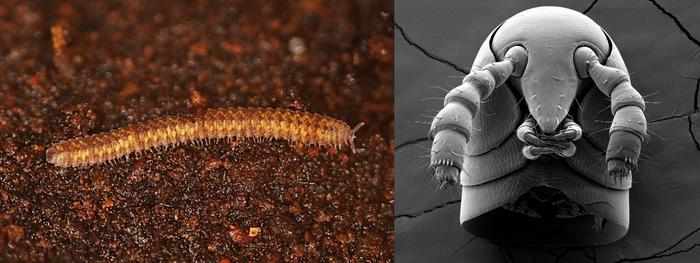
Long before dinosaurs roamed the Earth and tens of millions of years before the first vertebrates ventured onto land, millipedes were already helping shape the planet’s earliest terrestrial ecosystems. Now, a major international study led by researchers at Virginia Tech has uncovered new evidence suggesting these ancient arthropods appeared far earlier than previously believed.
Published in the journal Current Biology, the research presents the first complete evolutionary history of all living millipede orders. By combining genomic data from modern species with fossil evidence, scientists traced the origins of millipedes back nearly 460 million years, pushing their evolutionary timeline roughly 35 million years earlier than the oldest known millipede fossils.
The breakthrough was made possible by the discovery and genetic analysis of two extremely rare millipede groups that had long puzzled researchers. For decades, scientists lacked fresh specimens capable of providing DNA samples, leaving significant gaps in the millipede family tree.
Research teams traveled to remote regions of Mexico and the Canary Islands to locate the elusive species Siphoniulus neotropicus and Hirudicryptus canariensis. Their DNA was then compared with hundreds of genes from 82 millipede species and analyzed alongside data from 29 fossils, allowing researchers to reconstruct evolutionary relationships stretching back hundreds of millions of years.
The findings revealed that one supposedly unique millipede order was actually part of an already known evolutionary lineage, while the second group was finally assigned its proper place within the broader millipede family tree.
According to lead investigator Paul Marek, the results highlight just how ancient some of these lineages truly are. At the time millipedes first emerged, Earth looked radically different from today. There were no forests, flowering plants, birds, mammals, or vertebrate animals living on land. Instead, these early arthropods survived by feeding on primitive organic material spread across the planet’s surface.
The study also sheds new light on one of the most remarkable adaptations in millipede evolution: chemical defense systems. Researchers estimate that these biological defenses first appeared around 260 million years ago, making millipedes among the earliest animals to develop sophisticated chemical protection against predators.
Despite their low profile, millipedes remain essential to modern ecosystems. By breaking down decaying vegetation and recycling nutrients into the soil, they play a critical role in maintaining environmental balance. Scientists have formally identified more than 14,000 millipede species worldwide, yet experts believe tens of thousands more remain undiscovered.