
A team of international researchers has uncovered a gene that appears to play a pivotal role in one of biology’s most enduring mysteries: why the traits that help organisms thrive early in life may ultimately contribute to aging and disease later on. The discovery provides rare experimental evidence supporting a major evolutionary theory and could open new avenues for research into healthy aging and cancer prevention.
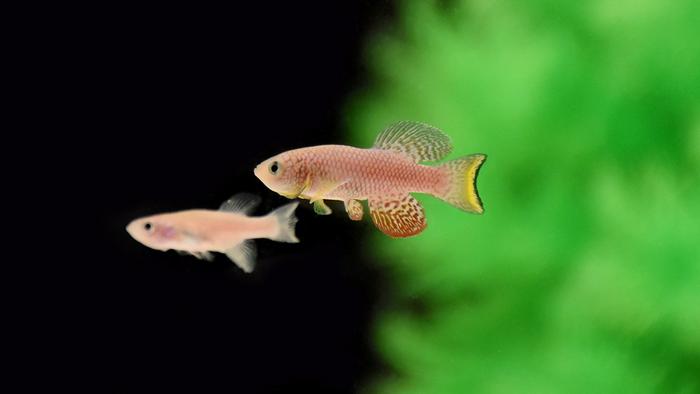
The study, led by scientists from the Hebrew University of Jerusalem in collaboration with researchers from the Technion and the University of East Anglia, focused on a gene known as vgll3. Using the African turquoise killifish, a species increasingly used in aging research due to its short lifespan, the team investigated how genetic changes influence growth, reproduction, and longevity.
By modifying the gene through CRISPR gene-editing technology, researchers found that fish carrying altered versions of vgll3 grew more rapidly and reached sexual maturity earlier than normal. While these characteristics could provide significant reproductive advantages in the wild, they also came with a biological cost. The same fish experienced shorter lifespans and a higher incidence of age-related tumors, including cancers resembling melanoma.
The findings offer compelling support for the theory of antagonistic pleiotropy, which proposes that some genes are favored by evolution because they enhance survival and reproduction in youth, even if they contribute to health problems later in life. Although the concept has been widely discussed for decades, identifying a specific vertebrate gene responsible for such a trade-off has proven challenging.
Further analysis revealed that vgll3 influences several essential biological processes, including cell division, stem cell activity, and DNA repair mechanisms. Researchers believe that heightened cellular activity may explain both the accelerated development observed in younger organisms and the accumulation of cellular damage associated with aging and cancer in older individuals.
The team also developed a new immunodeficient killifish model, allowing scientists to transplant and study tumor cells in ways that were previously impossible in this species. This breakthrough is expected to strengthen future cancer and aging research.
Because the vgll3 gene is also present in humans, the discovery may have broader implications beyond animal research. Previous studies had linked the gene to puberty timing and hormone regulation in people, but direct functional evidence had remained limited. Scientists now hope to determine whether it may be possible to preserve the gene’s benefits during early development while reducing its harmful effects later in life.
Published in the journal Nature Communications, the research offers new insight into the biological balance between growth, reproduction, longevity, and disease—an evolutionary compromise that may shape the lives of countless species, including humans.