
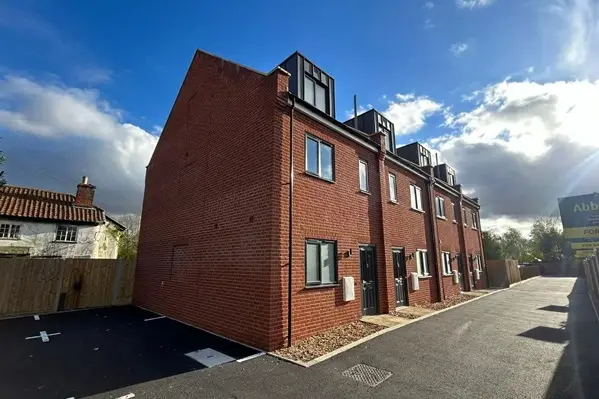
A sleepy Suffolk village has found itself at the centre of a storm, as four brand-new townhouses built on a brownfield site have become home to asylum seekers, sparking tension among residents. The modern three-storey properties, complete with en-suite bathrooms, underfloor heating, and electric vehicle charging points, were initially expected to appeal to young local buyers. Instead, they are now rented out rent-free by Serco on behalf of the Home Office.
For some villagers, the news has highlighted a sense of unfairness. “We were kept in the dark about it,” said Clive Bloomfield, 62, a lifelong resident. “People are working hard to get on the property ladder, and suddenly these homes go to families who didn’t even choose to live here.” Others, however, see it differently. Ray Aldridge, 74, who retired here 13 years ago, commented: “They’re doing no harm. If people have a deserving case, they need somewhere to live. I don’t see a problem.”
The controversy stems not only from the allocation of the homes but also their location and pricing. Initially listed at £350,000, well beyond the reach of first-time buyers, the houses were discounted to £270,000 after remaining unsold for a year. Positioned directly beside the London–Norwich rail line, they face four high-speed trains daily, making them less appealing for young families seeking starter homes.
Critics argue the move underscores wider frustrations about housing and migration policy. Former British Museum entomologist Ray Keseru voiced concerns about fairness, noting that asylum seekers are receiving fully equipped homes while local residents struggle with council housing waitlists. Others highlight the remote location, limited public transport, and dependence on cars as potential obstacles for the new occupants.
Serco, acting for the Home Office, said discussions about suitable postcodes were held with local authorities before families moved in. Yet for many villagers, the process felt opaque, exacerbating tensions in a community suddenly thrust into national debates over migration and property.
Despite the friction, the families themselves have reportedly integrated smoothly, with some residents offering practical help for shopping and transportation. The debate now continues over how to balance local housing needs with government obligations to house asylum seekers—highlighting the challenges of policy meeting reality in Britain’s rural communities.