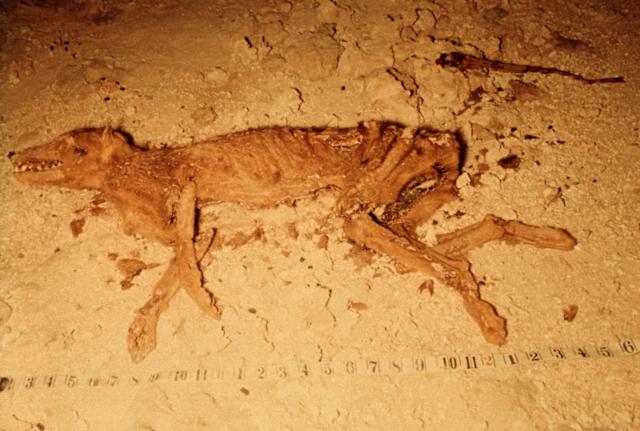
In the shadowy depths of Australia’s Nullarbor caves, a secret of the bushland lay hidden for millennia. Fossil fragments whispered stories of a small marsupial, closely related to kangaroos, that scuttled through the underbrush long before humans walked the continent. Now, researchers have pieced together these whispers to reveal a species previously unknown to science—though it may already have vanished from the wild.
A team from Curtin University, the Western Australian Museum, and Murdoch University has uncovered a new species of bettong, as well as two new subspecies of woylie, from fossil remains scattered across southwest Australia. Woylies, also known as brush-tailed bettongs, are celebrated ecosystem engineers. Each year, they turn over tonnes of soil in search of their favorite fungi, shaping the environment in ways that sustain other plants and animals.
Jake Newman-Martin, a PhD student at Curtin University and lead author of the study, explains the bittersweet significance: “We’re naming a species that likely went extinct before anyone even knew it existed. Yet understanding this hidden diversity allows us to better protect the living relatives, the critically endangered woylies, whose populations are fragmented and fragile.”
The new Nullarbor bettong, scientifically dubbed Bettongia haoucharae, was identified through meticulous analysis of bone and skull measurements. These fossils, preserved in museums across Australia and even in London and Oxford, revealed subtle differences that distinguish this ghostly species from its known cousins. Co-author Dr. Kenny Travouillon emphasizes the value of combining genetic research with fossil studies: “Fossils are more than remnants; they are keys to understanding evolutionary history and informing modern conservation strategies.”
These findings also refine conservation practices for the remaining woylies. By distinguishing two living subspecies, conservationists can better design breeding and translocation programs to enhance genetic diversity and resilience. It’s a reminder that even species already in decline may hold hidden complexities vital to their survival.
The researchers plan to collaborate with Indigenous communities to select a culturally meaningful name for the new species, honoring the Noongar term for woylie. For now, the discovery casts a poignant light on Australia’s fragile bushlands—a place where creatures can vanish without notice, leaving only the faintest traces of their existence.
From the caves of the Nullarbor to the forests of Western Australia, this lost bettong reminds us that the story of life is both fragile and endlessly surprising, and that the bush still holds secrets waiting to be unearthed.