The red dust of Jezero Crater may be hiding secrets billions of years old. NASA’s Perseverance rover, tirelessly rolling across Mars since 2021, has uncovered a tantalizing clue: a rock sample that could bear the fingerprints of ancient microbial life.
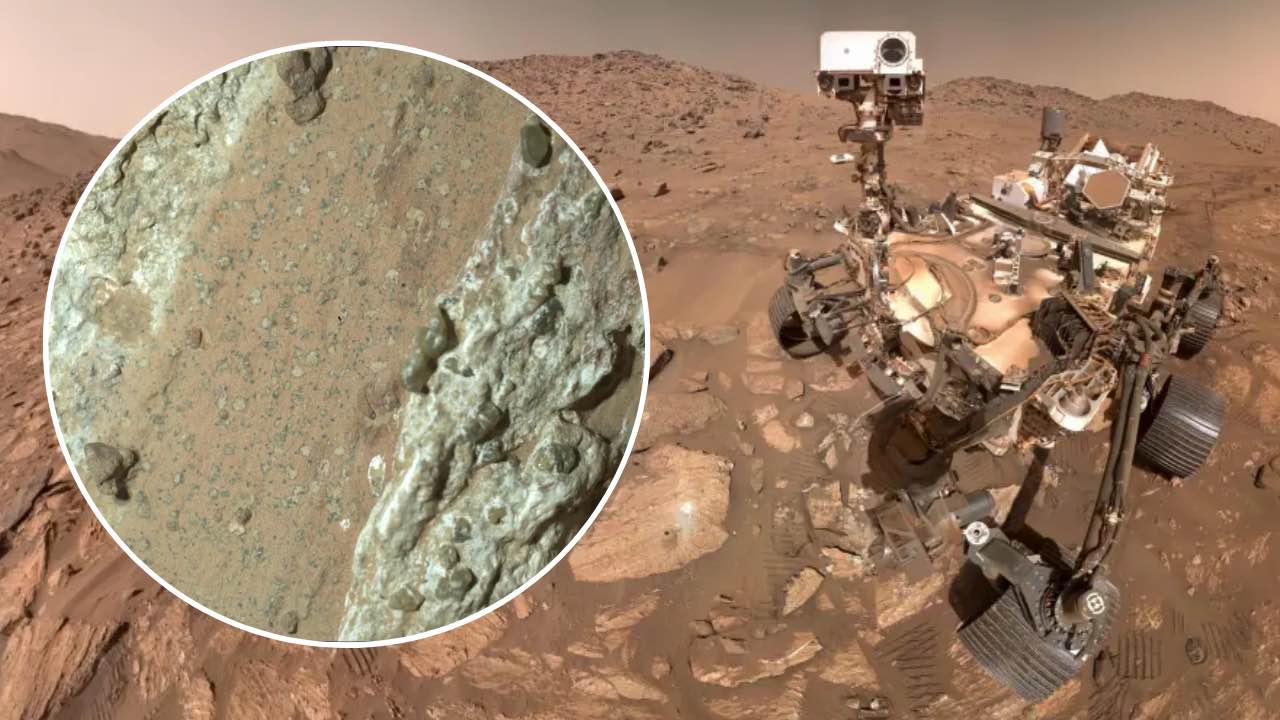
Dubbed Sapphire Canyon, the sample comes from a rock named Cheyava Falls in what was once a riverbed. Upon closer inspection, NASA scientists found “leopard spots” etched across the mineral surfaces—distinct patterns where chemical reactions once danced across the rock. These spots contain iron-rich minerals, vivianite and greigite, which on Earth often appear around decaying organic matter.
“Vivianite is particularly interesting because it can carry a biological signature,” said NASA officials. While the team cautions that these minerals can form through non-biological processes, the context here is intriguing: the rocks show no signs of extreme heat or acidity, conditions that would normally produce such minerals without life.
This discovery suggests Mars may have hosted life later into its history than scientists previously thought. Sedimentary rocks at Bright Angel, where the samples were collected, appear relatively young—hinting that habitable conditions may have persisted far longer than imagined.
NASA Administrator Sean Duffy described the find as “the closest we have ever come to discovering life on Mars,” emphasizing its potential to reshape our understanding of the planet. Nicky Fox, Associate Administrator for NASA’s Science Mission Directorate, echoed the excitement, noting that the agency will release data to the broader scientific community for independent analysis and verification.
Perseverance’s mission has been methodical: drilling, sampling, and analyzing Mars’ rocky surface with its onboard instruments. A follow-up mission will eventually retrieve these precious samples and bring them to Earth for more detailed laboratory testing—a journey that could answer one of humanity’s oldest questions: did life ever arise on Mars?
If confirmed, these findings won’t just rewrite the story of Mars—they’ll also offer a window into the origins of life across the cosmos. Every speck of rock analyzed could help scientists understand how life emerges, survives, and leaves traces in alien worlds, providing vital clues for the search for life beyond Earth.