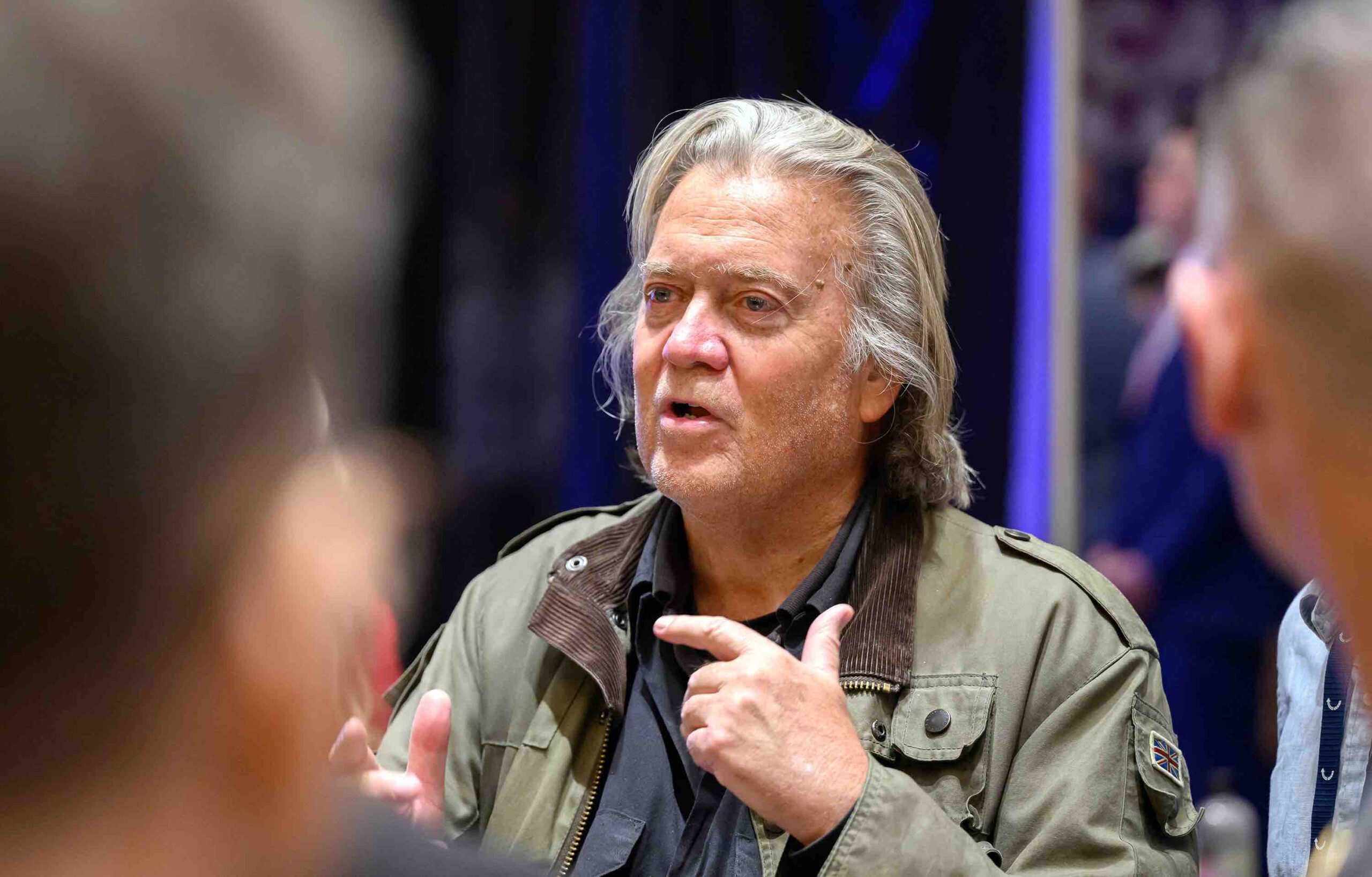
The room was thick with applause and unease as Steve Bannon, Donald Trump’s former chief strategist, painted his latest vision of a West under siege. Speaking at a gathering of national conservatives in Washington, Bannon didn’t mince words: in his view, England is inching toward civil conflict, undone by what he calls a failure to confront radical Islam and defend cultural identity.
A Dire Warning From Trump’s Ally
Bannon has built his reputation on delivering firebrand rhetoric, but his remarks on Thursday struck a particularly ominous note. He told the audience that Britain, once a symbol of stability, is “heading to a civil war as we speak.” His reasoning stretched beyond immigration debates to include financial instability, citing a collapse in 30-year bond markets as evidence that the West’s foundations are faltering.
To his listeners, many of whom already embrace his populist worldview, the warning resonated as both a cautionary tale and a rallying cry.
Linking Economics and Identity
Bannon’s argument blended economic analysis with cultural alarm. Pointing to market turbulence, he suggested that investors themselves were losing confidence in Europe’s future. “The bond markets are saying, ‘We’re not so sure you’re going to be around,’” he claimed, using financial data as a metaphor for political and social fracture.
But at the heart of his message was identity politics. He argued that Britain, along with cities like Paris and Brussels, had allowed radical Islam to “metastasize.” As a visual sign of resistance, he pointed to the growing display of English and British flags across the country, which he interpreted as a signal of looming confrontation.
A Platform for Populism
The Washington event—NatCon 5—brought together figures aligned with the America First agenda. Among the speakers were former Trump officials and conservative thinkers eager to outline a philosophical framework for the movement. Yet Bannon drew the largest crowd, using his platform to argue against U.S. involvement in Ukraine and Israel while warning that America should study Europe’s struggles as a cautionary mirror.
Casting Britain as a Warning
For Bannon, Britain is not just another foreign case study but a warning for the United States. He sees its policies on free speech, immigration, and multiculturalism as eroding national identity. He asked rhetorically whether leaders like London’s mayor, Sadiq Khan, or their counterparts in European capitals, were “giving back” their cities—implying that cultural change had permanently reshaped them.
The Politics Behind the Rhetoric
Critics argue that Bannon’s framing fuels fear rather than offers solutions. By linking immigration with civil strife and financial collapse, his message risks oversimplifying complex issues while stoking division. Supporters, however, see his willingness to say the unsayable as proof of his relevance within conservative circles.
Trump, Tech, and Free Speech
The tone of alarm over Britain’s trajectory wasn’t confined to Bannon. At a separate dinner with tech executives at the White House, questions about Britain’s crackdown on online speech surfaced. Mark Zuckerberg, CEO of Meta, was caught off guard by the inquiry but deflected. Donald Trump himself weighed in, saying he was “very surprised” by restrictions on social media expression in the UK and calling the trend “sad” and “not a good thing.”
A Broader Climate of Uncertainty
From populist conferences in Washington to conversations in the Oval Office, Britain is increasingly used as an example in debates about free speech, national identity, and security. For Bannon, the country’s struggles are proof that Western democracies are in decline unless they reverse course.
Whether his predictions of civil war hold any weight is debatable. What’s undeniable, however, is that his rhetoric continues to influence the discourse—shaping how audiences in America view Europe and, perhaps, how they envision their own political future.