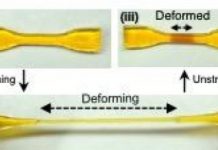
Research: Self-growing materials that strengthen in response to force —
A strategy inspired by the process responsible for muscle growth could lead to the development of stronger, longer-lasting materials.
Hokkaido University researchers have developed...
Research: New knowledge of deep currents may help predict future climate impacts —
A new international study finds that the Atlantic meridional overturning circulation (MOC), a deep-ocean process that plays a key role in regulating Earth's...
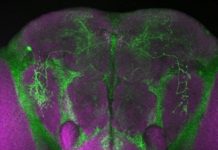
Research: Direct link between illness and the need for more sleep —
Humans spend nearly one-third of their lives in slumber, yet sleep is still one of biology's most enduring mysteries. Little is known about...
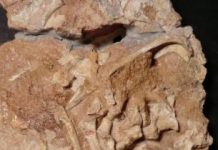
Research: ‘Antarctic king’ shows how life at the South Pole bounced back after mass...
Antarctica wasn't always a frozen wasteland -- 250 million years ago, it was covered in forests and rivers, and the temperature rarely dipped...

Research: Earth’s largest extinction event likely took plants first —
Little life could endure the Earth-spanning cataclysm known as the Great Dying, but plants may have suffered its wrath long before many animal...
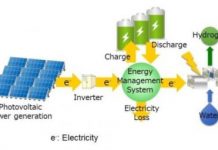
Research: Estimation of technology level required for low-cost renewable hydrogen production —
NIMS, the University of Tokyo and Hiroshima University jointly evaluated the economic efficiency of hydrogen production systems combining photovoltaic power generation and rechargeable...
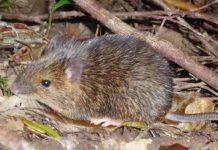
Research: What causes rats without a Y chromosome to become male? —
A look at the brains of an endangered spiny rat off the coast of Japan by University of Missouri (MU) Bond Life Sciences...
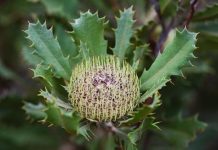
Research: Australian plants facing extinction —
New research by the Threatened Species Recovery Hub has identified the top 100 Australian plant species at risk of extinction.
Researcher Dr Jennifer Silcock...
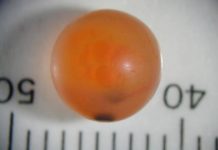
Research: Salmon populations may adapt their eggs to survive in degraded rivers —
A University of Southampton study suggests that the membrane of salmon eggs may evolve to cope with reduced oxygen levels in rivers, thereby...
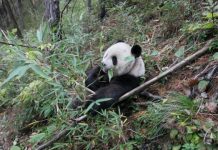
Research: Ancient pandas weren’t exclusive bamboo eaters, bone evidence suggests —
The giant pandas we know and love today live only in the understory of particular mountains in southwestern China, where they subsist on...
Top News

Hey ISIS, You Suck: Local Muslims Post Anti-ISIS Billboard
A new billboard on Manchester Road in Missouri reads, "HEY ISIS, YOU SUCK!!! From: #ActualMuslims."
A group of Muslim-Americans have put up a blunt billboard...