
New study proves Darwin was right about invasive species
The concept that an invasive species from a more species diverse region is more likely to survive in a new region was proposed by...
Researchers find first evidence that reptiles learn through imitation
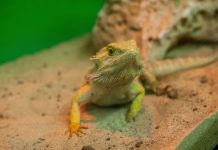
Science Daily reported today that a team of researchers from Hungary and the UK have shown the first evidence that reptiles can learn through...

Researchers find that curiosity makes the brain learn better
Curiosity did not kill the cat it made it learn better. The first connection between curiosity and improved learning and memory has been found...

New fossil proves limb regeneration is 300 million years old
The newly discovered remains of an amphibian ancestor that lived in northwest Germany 300 million years ago is the oldest evidence of limb regeneration...

Cutting short lived pollutants could curb sea level rise, study suggest
Science Daily reported yesterday on new research which suggests that cutting emissions of four specific pollutants could significantly slow down sea level rise in...

Branched-chain carbon molecules found in space for the first time
Isopropyl cyanide has been discovered in the giant gas cloud called Sagittarius B2. Arnaud Belloche from the Max Planck Institute for Radio Astronomy and...
Newly discovered fairyfly species pushes lower limit of insect size
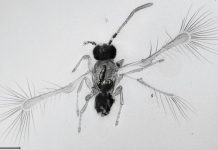
Researchers have found a new species of fairyfly which they named, appropriately enough, Tinkerbella nana, LiveScience reported yesterday.
The fairyfly lives in Costa Rica, and...

Ancient ‘fireside chats’ created the basics of human society
Man learned to use fire at least 400,000 years ago. Fire functioned as a tool and extended the time that people remained awake. Fire...

Evidence discovered for nocturnal behavior in synapsids
Previously, the fossil record indicates that nocturnal behavior began with mammals. The reasoning is that the coordination of neural input necessary for nocturnal activity...
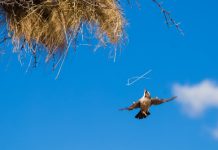
Study finds hard work makes you old and sick
Dr. Andrew Young of the Centre for Ecology and Conservation at the University of Exeter and Dr. Dominic Cram from the University of Exeter...
Top News

Hey ISIS, You Suck: Local Muslims Post Anti-ISIS Billboard
A new billboard on Manchester Road in Missouri reads, "HEY ISIS, YOU SUCK!!! From: #ActualMuslims."
A group of Muslim-Americans have put up a blunt billboard...