
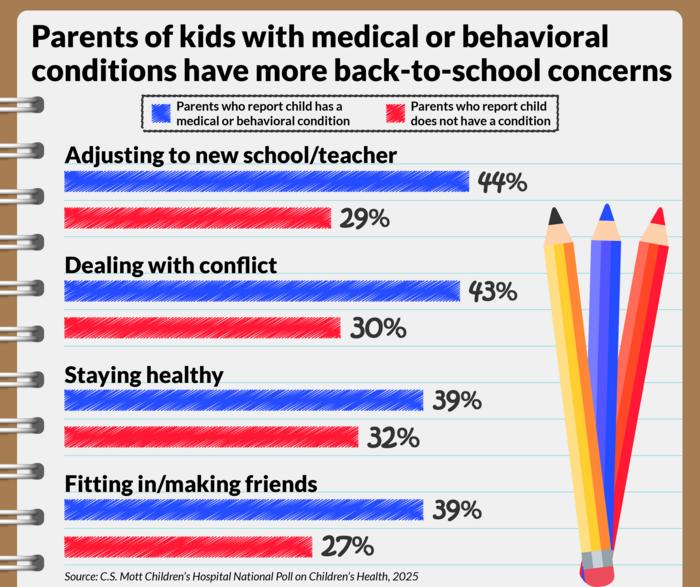
The smell of freshly sharpened pencils and new backpacks usually signals a season of anticipation. But for many parents, the first day of school comes with a knot in the stomach rather than a sense of excitement. A new national survey suggests that one in four parents are sending a child to class this fall with a medical or behavioral condition—and with that comes a different set of worries.
Instead of wondering about homework loads or which teacher their child will have, these parents are more likely to be calculating whether school staff will understand their child’s needs, if classmates will include them, and whether emergencies will be handled properly.
The University of Michigan’s C.S. Mott Children’s Hospital National Poll on Children’s Health, which surveyed more than a thousand parents of kids aged 6 to 12, paints a picture of divided confidence. Families managing asthma, ADHD, food allergies, anxiety, or other conditions are more anxious about the school year ahead—and less certain they can set their child up for success.
Many have already met with teachers or school nurses to outline care plans. Some have formalized accommodations through individualized education programs or 504 plans, which can secure everything from modified class schedules to staff training for emergencies. But only a portion of families report receiving written guidance from healthcare providers, leaving some parents unsure of how prepared their child’s school really is.
The emotional layer is just as pressing. Parents describe children who are eager to rejoin classmates but less likely to feel confident or socially at ease. Pediatricians suggest small but powerful tools: classroom books that normalize health differences, or parent-led sessions to explain conditions in ways peers can understand. Such efforts, they argue, foster empathy and reduce stigma before it takes root.
Beyond medical logistics, parents are also calling for more from schools: programs that address conflict resolution, mental health, and even the pressures of social media. Over 60 percent of parents managing health conditions say these supports are essential—far higher than among families without such concerns.
Experts stress that schools stand at the center of this web of care. Proactive partnerships between teachers, nurses, counselors, and families can transform what might feel like a fragile year into one of stability and growth. Parent-teacher conferences, they add, should be viewed not only as academic check-ins but as opportunities to update health and social strategies.
For parents navigating the start of the year with both school supplies and emergency plans in hand, the message from professionals is clear: they don’t need to face it alone. With the right coordination, children can enter the classroom feeling supported, safe, and ready to learn—no matter the health challenges they bring with them.