
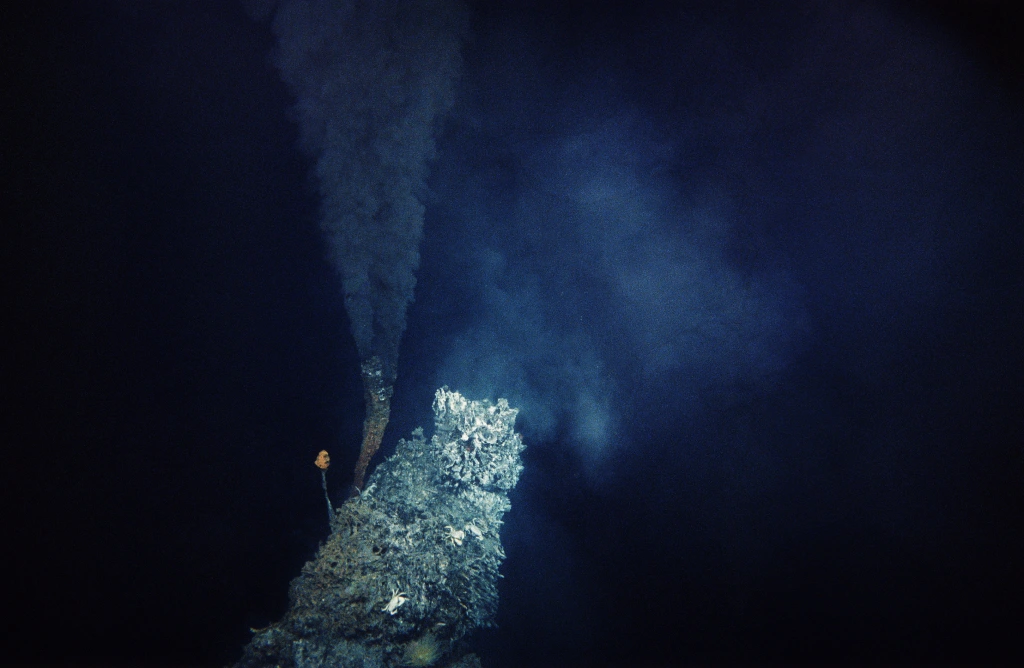
Far beneath the waves, in a forgotten corner of the Pacific, a geological secret is emerging that could redefine the future of clean energy. Researchers exploring the east Caroline Plate, just west of the Mussau Trench, have uncovered a massive network of hydrothermal pipes — a structure now named the Kunlun pipe swarm — that appears to be one of the largest natural reservoirs of geo-hydrogen ever detected.
Stretching across 150 kilometers, the Kunlun pipes are no ordinary underwater formations. With diameters ranging from 450 to 1,800 meters, these cylindrical giants bear the scars of repeated hydrothermal eruptions, leaving behind layered breccias and bowl-shaped pockmarks reminiscent of explosive kimberlite formations. In simpler terms: this is a landscape forged by tremendous subterranean forces, likely powered by hydrogen accumulation deep within the oceanic lithosphere.
A Surprising Source Far from Plate Margins
Unlike previously studied hydrogen vents, typically found along active tectonic boundaries, the Kunlun field sits 80 kilometers away from any active plate margin. This challenges existing assumptions about where hydrogen can accumulate, hinting at a broader, previously hidden global reservoir. Ongoing seismic monitoring has recorded over 800 minor tremors in just 28 days, suggesting that gas — mostly hydrogen — is still actively leaking from the deep crust.
Hydrothermal fluids escape through tiny cracks and sub-centimeter channels along pockmarks and breccia piles, which are often coated with yellowish microbial mats. These microbial communities, together with apex predators like scorpionfish, form an entire unique ecosystem thriving amid the hydrogen-rich environment. Researchers believe that the microbial biomass far outweighs the larger species, feeding on chemical energy released from hydrothermal processes.
Energy Packed in Hydrogen
The scale of these pipes hints at the power of hydrogen as a natural force. Experts estimate that the formation of a single Kunlun pipe could require energy equivalent to millions of tons of TNT — energy plausibly stored in compressed hydrogen or hydrogen-oxygen mixtures. For perspective, just one ton of hydrogen reacting with oxygen releases 143 gigajoules of energy, enough to rival conventional explosives many times over.
“This discovery could indicate vast, untapped hydrogen reserves in the ocean lithosphere,” explains Prof. Xiao Yuanyuan, lead author of the study. “If we can understand how to access these reserves safely, they may become economically viable sources of clean energy in the future.”
A Window into Earth’s Subsurface Chemistry
The Kunlun discovery opens new questions about how Earth naturally produces and stores hydrogen. Clumped nitrogen isotope analysis indicates that the gas originates predominantly from atmospheric components, yet its accumulation in these massive pipe structures points to processes deep in the lithospheric mantle. It’s a complex interplay of geology, chemistry, and biology that scientists are only beginning to unravel.
As the world hunts for sustainable energy alternatives, the ocean’s hidden hydrogen may emerge as a game-changer. For now, the Kunlun pipe swarm serves as a powerful reminder: even in the quietest corners of the deep sea, Earth is still full of explosive surprises.