
A team of physicists has achieved a milestone in quantum materials science by observing a long-sought phenomenon in graphene, the so-called “miracle material.” The discovery could open the door to groundbreaking advances in electronics, sensors, and quantum computing.
In a study published in Nature Physics, researchers from the University of Göttingen, working with colleagues in Braunschweig, Bremen, and Fribourg, report the first direct observation of Floquet effects in graphene. These effects occur when light pulses create new, controllable electronic states in a material, a process known as Floquet engineering.
Graphene Meets Floquet Engineering
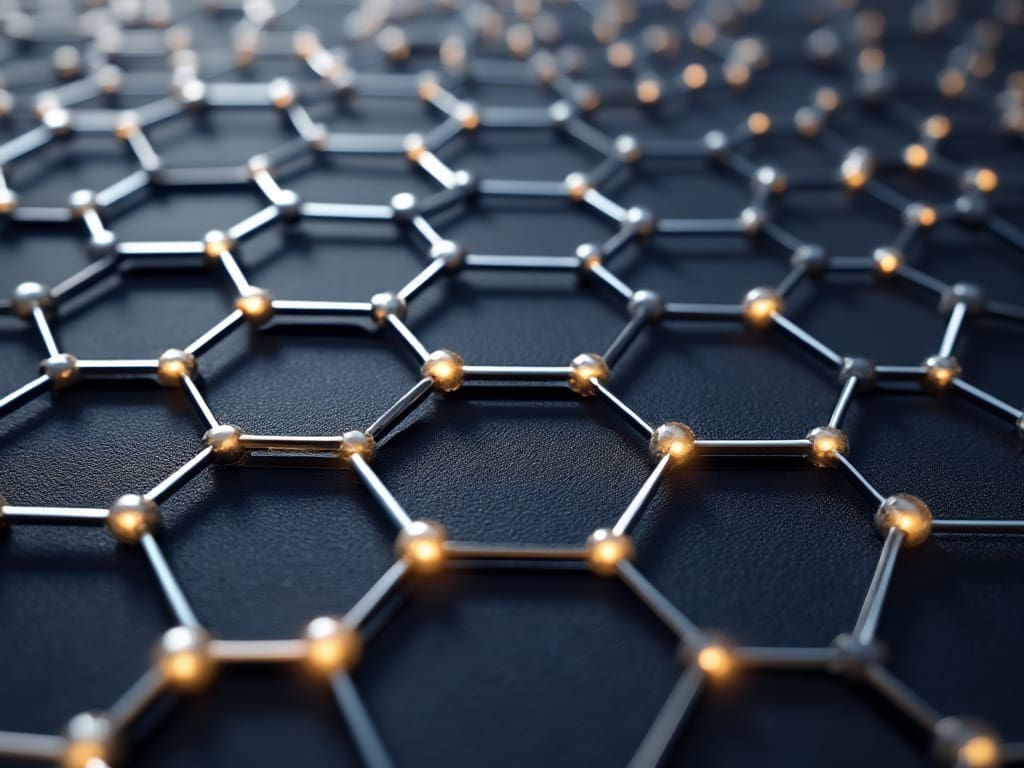
Graphene—a single sheet of carbon atoms arranged in a honeycomb pattern—is already celebrated for its extraordinary properties: flexibility, stability, and remarkable conductivity. Its applications range from transparent displays to ultra-fast batteries and efficient solar cells.
Until now, however, it was unclear whether Floquet engineering, previously demonstrated in other materials, could be applied to metallic and semi-metallic systems like graphene. The new findings confirm that it can.
“Our measurements clearly prove that Floquet effects occur in the photoemission spectrum of graphene,” said Dr. Marco Merboldt, physicist at the University of Göttingen and first author of the study. “This makes it clear that Floquet engineering actually works in these systems—and the potential of this discovery is huge.”
Capturing Fleeting Quantum States
To achieve this result, the team used femtosecond momentum microscopy, a cutting-edge technique that tracks ultrafast processes in materials. By exciting graphene samples with bursts of light lasting only quadrillionths of a second, and probing them with delayed light pulses, the researchers were able to capture and map dynamic electronic states.
The data showed the emergence of Floquet states in graphene’s electronic structure, settling a long-standing debate in physics and confirming that laser pulses can be used to tailor the quantum properties of even highly conductive materials.
Toward Next-Generation Technologies
The implications are far-reaching. Floquet engineering could allow scientists to design and fine-tune materials for highly specific purposes in record time—creating a foundation for the electronics, computing, and sensor technologies of the future.
“Our results open up new ways of controlling electronic states in quantum materials with light,” explained Professor Marcel Reutzel, who co-led the project with Professor Stefan Mathias. “This could lead to technologies in which electrons are manipulated in a targeted and controlled manner. What is particularly exciting is that it also enables us to investigate topological properties—very stable features that hold great promise for reliable quantum computers and advanced sensors.”
A Step Closer to Quantum Innovation
The research was supported by the German Research Foundation (DFG) through Göttingen University’s Collaborative Research Centre “Control of Energy Conversion at Atomic Scales.”
By proving that Floquet engineering works in graphene, the team has taken a decisive step toward unlocking the full potential of one of the most remarkable materials ever discovered—bringing the futuristic vision of light-controlled electronics and quantum devices closer to reality.