
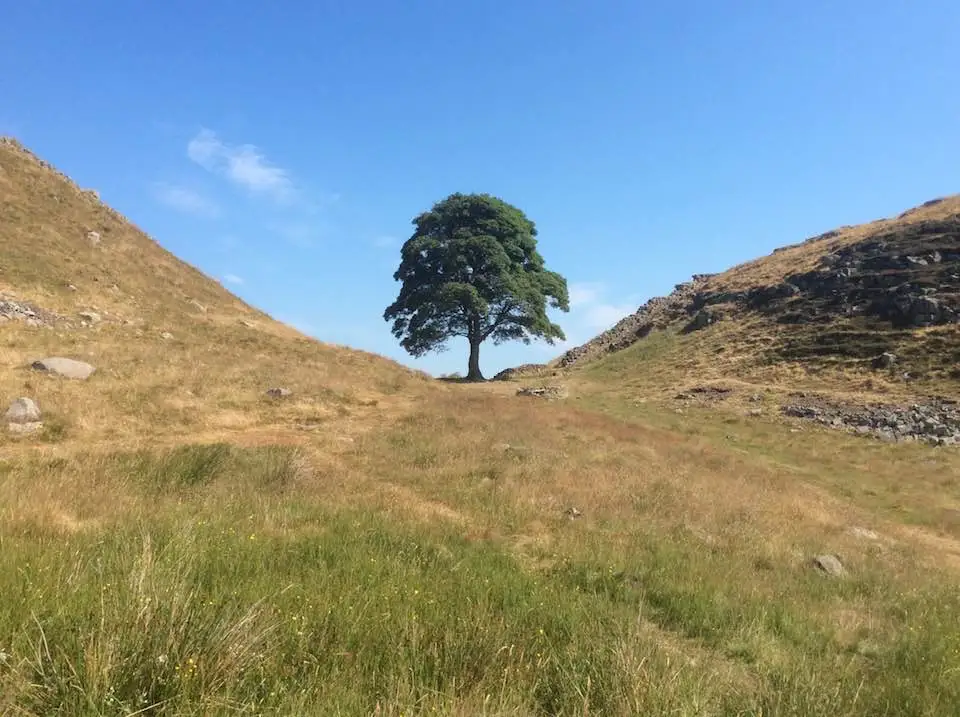
A lone sycamore that once graced the rolling landscape of Hadrian’s Wall has revealed its hidden history—thanks to the painstaking work of dendrochronologists after the tree was illegally felled last year. The iconic Sycamore Gap tree, a landmark that had silently watched over Northumberland for more than a century, was deliberately cut down in September 2023, sparking national outrage.
Historic England’s investigative team examined the tree’s cross section in Portsmouth, counting the growth rings that hold the story of its life. Their analysis suggests the tree was at least 100 to 120 years old, meaning it likely sprouted in the late 1800s. “Each ring tells a year of the tree’s life,” explained Zoe Hazell, senior palaeoecologist. “And here, we could trace the story of a tree that became one of the nation’s most recognized natural icons.”
The tree’s structure told an even more intricate story. Two main stems, now fused together, originally grew as separate trunks for about 30 to 35 years before merging. The team also noted an unusual feature known as “internal bark,” marking where the trunks joined—a rare signature that offers a glimpse into the tree’s unusual development.
Historic England’s dendrochronologists faced challenges uncommon in their usual work with historic buildings and archaeological sites. Sycamore growth rings are less distinct than those of oak or pine, and reference data for historic sycamores is limited. Yet, the effort ensured that a tangible piece of the tree’s legacy is preserved. The treated slice will join Historic England’s National Wood Collection, remaining available for future research and public interest.
Daniel Graham and Adam Carruthers, who were found guilty of illegally felling the tree, received sentences exceeding four years in prison. Meanwhile, the National Trust, Historic England, and Northumberland National Park have launched initiatives to honor the Sycamore Gap tree, ensuring its memory continues to inspire communities locally and nationally.
What began as a shocking act of vandalism has now yielded a century of stories etched in wood—testament to the quiet endurance of a tree that stood at the heart of England’s historic landscape.